The intelligence stays in the building.
Water, energy, and safety — sensed, understood, and acted on where they happen. The data never leaves. The compute runs on clean power. And the first deployment hardens into a template, so each building after it goes in faster.
Most “smart” buildings are only smart somewhere else.
The sensors are in your building; the intelligence is in a vendor's cloud. Your building's data — who is where, what runs when, how much you waste — is shipped off-site to be understood. Brilliant Buildings inverts that.
The conventional way
Cameras, meters, and controls stream your building's raw data to someone else's servers. Understanding happens off-site, behind a subscription, on infrastructure you don't control — and the data outlives your relationship with the vendor.
SENSORS → the cloud ↗ → someone else's servers
The Brilliant Buildings way
Every measurement is processed where it is made — on compute inside the building. Nothing raw leaves the property. You get the insight and the automation; no one else gets the data. The building understands itself.
SENSORS → on-site compute ▪ → stays in the building
Three commitments, engineered in — not bolted on.
These aren't features to toggle. They're the design constraints every module is built to satisfy from the first sensor to the last kilowatt.
Sovereign
Data sovereignty is the whole point: every reading, frame, and event is processed and stored on-site. Tight, device-level firewalls stop every sensor, camera, and controller from phoning home or leaking metadata — nothing reaches the internet unless you send it deliberately. Because the data never travels, it stays yours.
Responsible
Analysis runs locally, transparently, and within limits. Access is role-gated — a first responder sees life-safety, a contractor sees one room — every action is logged, and privacy is a default, not a setting. Powerful tools, used with restraint and accountability.
Clean-powered
The GPUs and compute that do the thinking run on on-site clean energy — the same clean electrons that run the building. Efficient by design and schedulable, the intelligence scales without leaning on the grid.
Four modules. One building that finally makes sense.
Each is retrofit-friendly, open-standard, and measured against a real baseline — added to an existing building without rip-and-replace and without a recurring cloud bill.
Water intelligence
Sub-metered by use, watched for leaks and waste, and alerting the moment a number drifts. Finds the money hiding in a summer utility bill.
target: a $10,000/mo water bill → measured & cut
Energy intelligence
Per-circuit power on lighting and plug loads, a real consumption baseline, and automation that trims waste without anyone noticing — except on the bill.
circuit-level visibility → automated savings
Safety & responder readiness
An accurate, role-gated model of the building — shutoffs, exits, access, cameras — so an authorized crew that has never been inside can orient before they enter.
walk the building before you enter it
Digital building model
A precise, browser-viewable twin with every device annotated in place — the living map the other three modules hang on, and the record a facilities team actually trusts.
every device, annotated in place
Integrate the building you have. Don't rip it out.
Every building already runs a tangle of systems — electrical, HVAC, alarm, access control, metering — each with its own screen and its own silo. The platform is built to speak to all of them and present them as one.
Flexible and extensible by design
An open architecture that adapts to the building, not the other way around — new systems, sensors, and whole sites slot in without re-platforming.
Integrate, not rip-and-replace
We unify the complex systems already installed and leave working equipment in place, instead of forcing a costly, disruptive tear-out. Existing electrical, HVAC, alarm and access systems keep running — now visible and controllable together.
A single pane of glass
Monitoring, control, and visualization for every system in one unified view — so disparate equipment finally reads and operates as a single building.
The compute warms the building.
At 930 National Pkwy, Schaumburg, IL, a water-loop heat-pump system ties the whole building to one shared loop — an ideal path to capture the heat the GPUs give off and put it to work warming the rest of the building.
Waste heat becomes warmth
The GPUs that do the work run hot. On a water-loop heat-pump building, that heat is recovered into the loop and reused to warm the building — turning a cooling problem into free winter heat.
Generate and store on site
On-site solar and battery storage keep the clean electrons local — delivered with an experienced, minority-certified installer — so the compute runs on power the building makes itself.
A blueprint to copy
Every lesson — the loop, the integrations, the controls, the energy — becomes a replicable blueprint, so the next building starts where this one finished.
930's commercial building-management system runs on Schneider Electric EcoStruxure (BACnet) — integrated directly, so efficiency gains build on the systems already there.
Solve it once. Then it's a template, not a project.
The value isn't one clever building — it's a package that gets easier every time. Prove it where change is quick, harden it into something repeatable, deploy it where the stakes are higher.
Prove it, nimbly
Stand each module up in a building where one owner controls the whole environment and can grant access in a day. Measure before and after. Change fast.
Harden the template
Turn what worked into configuration and runbooks — reversible, documented, measured. It stops being an experiment and becomes a package.
Deploy anywhere
The next building gets the hardened package, pre-validated with evidence. Each install is faster and cheaper than the one before it.
one building → a template → dozens of brilliant buildings
and a proving ground for other Innovation DuPage startups — the template, integrations, and lessons carry to the next company's building
Real buildings. Room to be brilliant.
Not concepts — large, occupied Illinois buildings already in the program. The bigger and busier the building, the more there is to save, secure, and automate — and the more a proven template is worth.
Two not-for-profit buildings. One commercial stepping stone. One template.
Advanced through the College of DuPage Innovation Highway — proven at two not-for-profit campuses that can move quickly and certify what works, then carried into a commercial building as the springboard to many more.
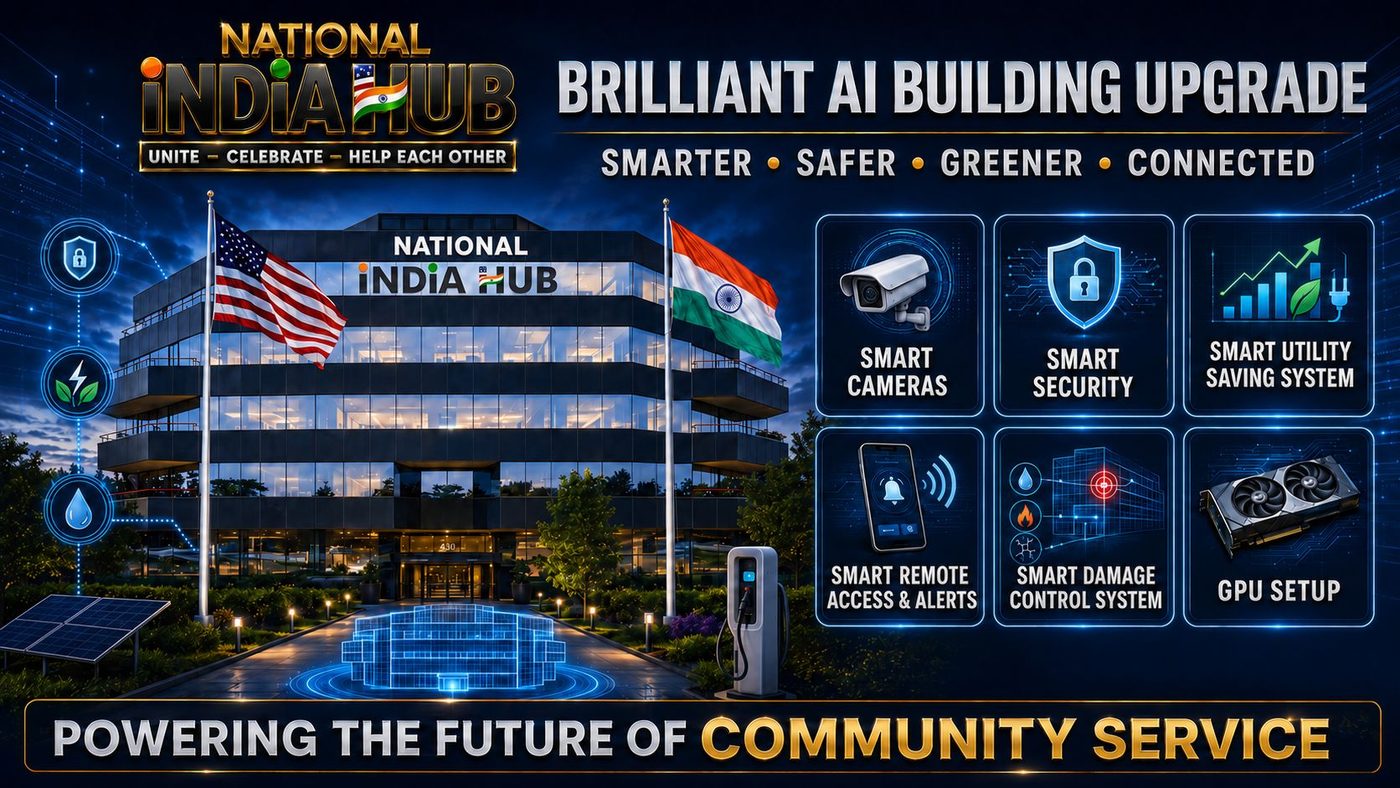
Global Community Hub
A five-story not-for-profit community campus, owner-operated — the nimble testbed where each module is proven first, water bill and all.
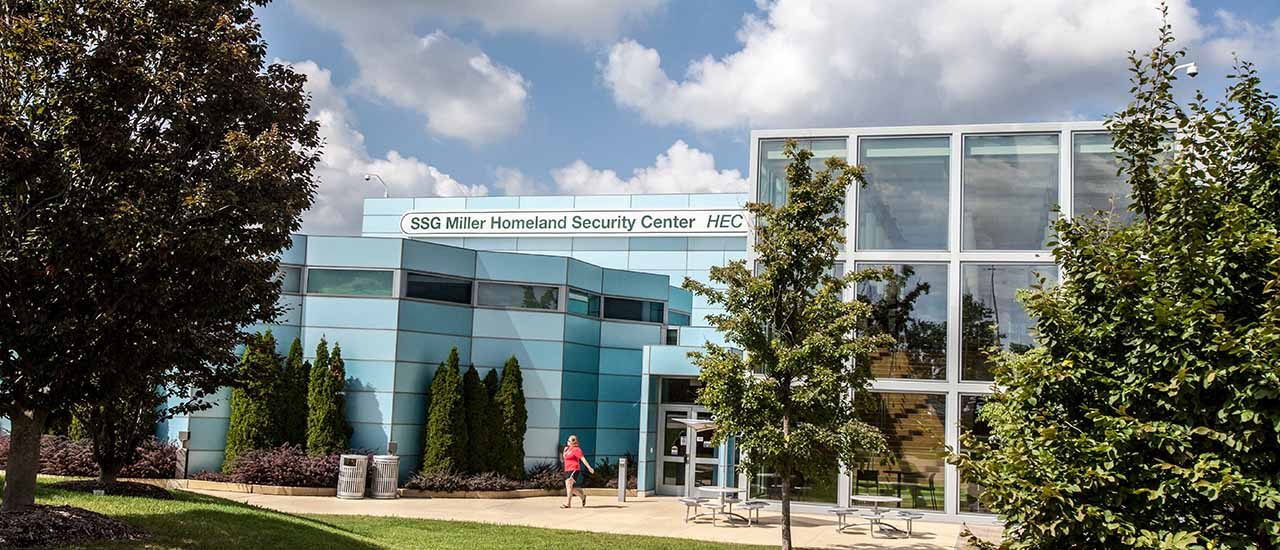
Not-for-profit · proveCollege of DuPage · HEC
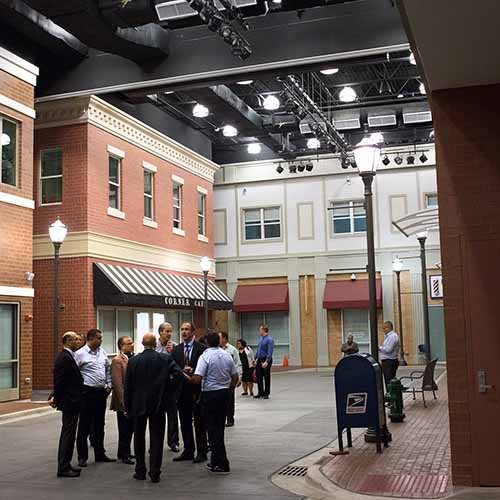
The not-for-profit Homeland Security Education Center, where ~7,600 first responders train each year — the campus that validates the safety module.
Not-for-profit · certifyCommercial stepping stone
A 40,000-square-foot commercial building — the first private, at-scale deployment of the hardened package, and the springboard to dozens of neighboring hotels and buildings.
Commercial · scalefrom here → dozens of neighboring hotels and buildings near Schaumburg, IL and beyond, looking for novel solutions
Have a building that deserves to be brilliant?
Whether you own one building or a portfolio, the model is the same: keep your data, cut your waste, run it on clean power, and prove it with numbers. Let's start with a walk-through.